
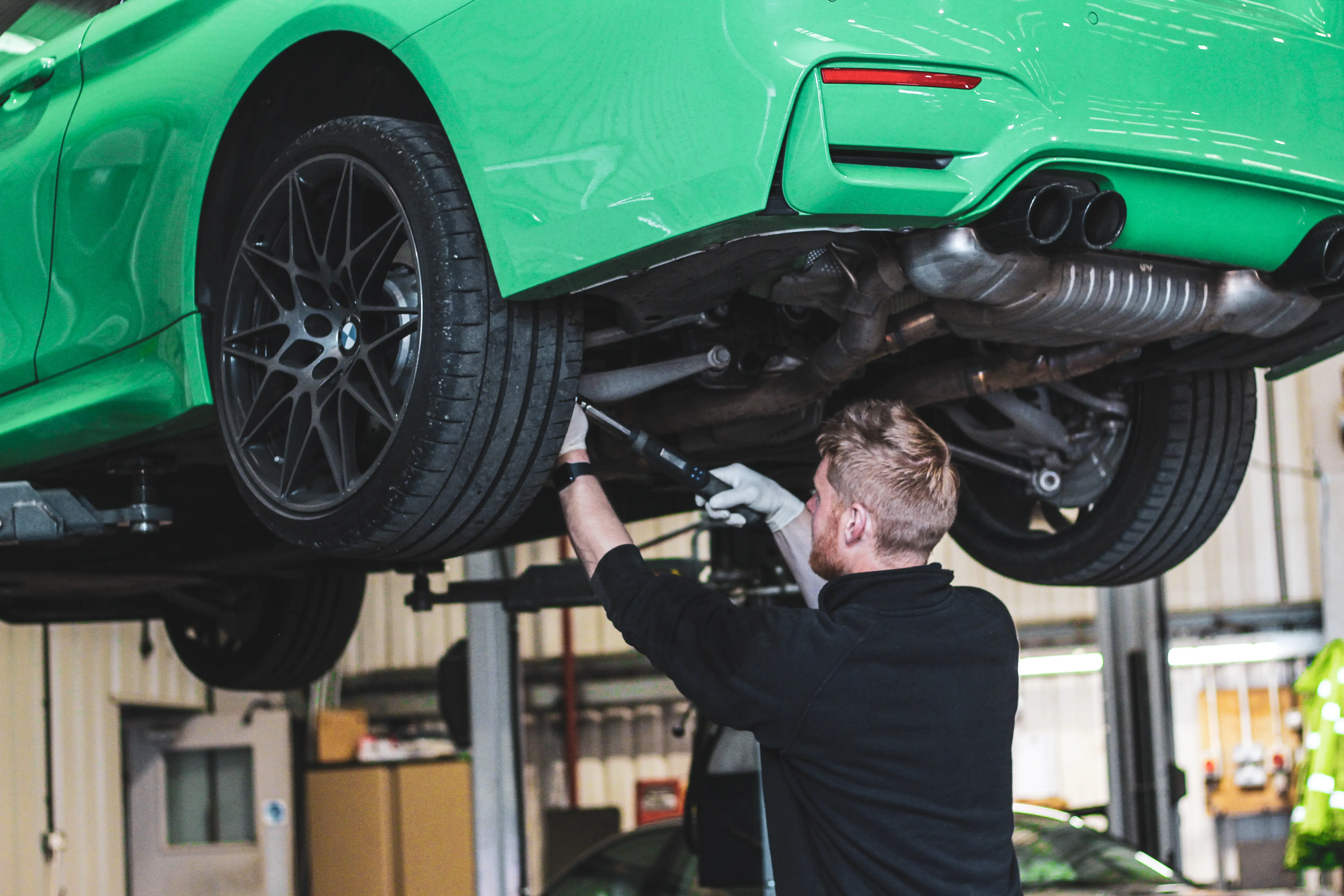
Diagnosed before condemned
A surprising number of "failed turbos" are nothing of the sort. We test first, show you the evidence, and fix the cause as well as the turbo — so the new one lasts.
What a struggling turbo sounds and looks like
Turbo trouble announces itself in sound, smoke and lost urgency — but so do boost leaks, split charge pipes and stuck actuators, which cost a fraction to fix. The symptoms overlap almost completely, which is exactly why we never condemn a turbo from the driver’s seat.
The last one is the classic N54 wastegate rattle — a typewriter noise off throttle or just after switch-off, with an established fix short of new turbochargers.
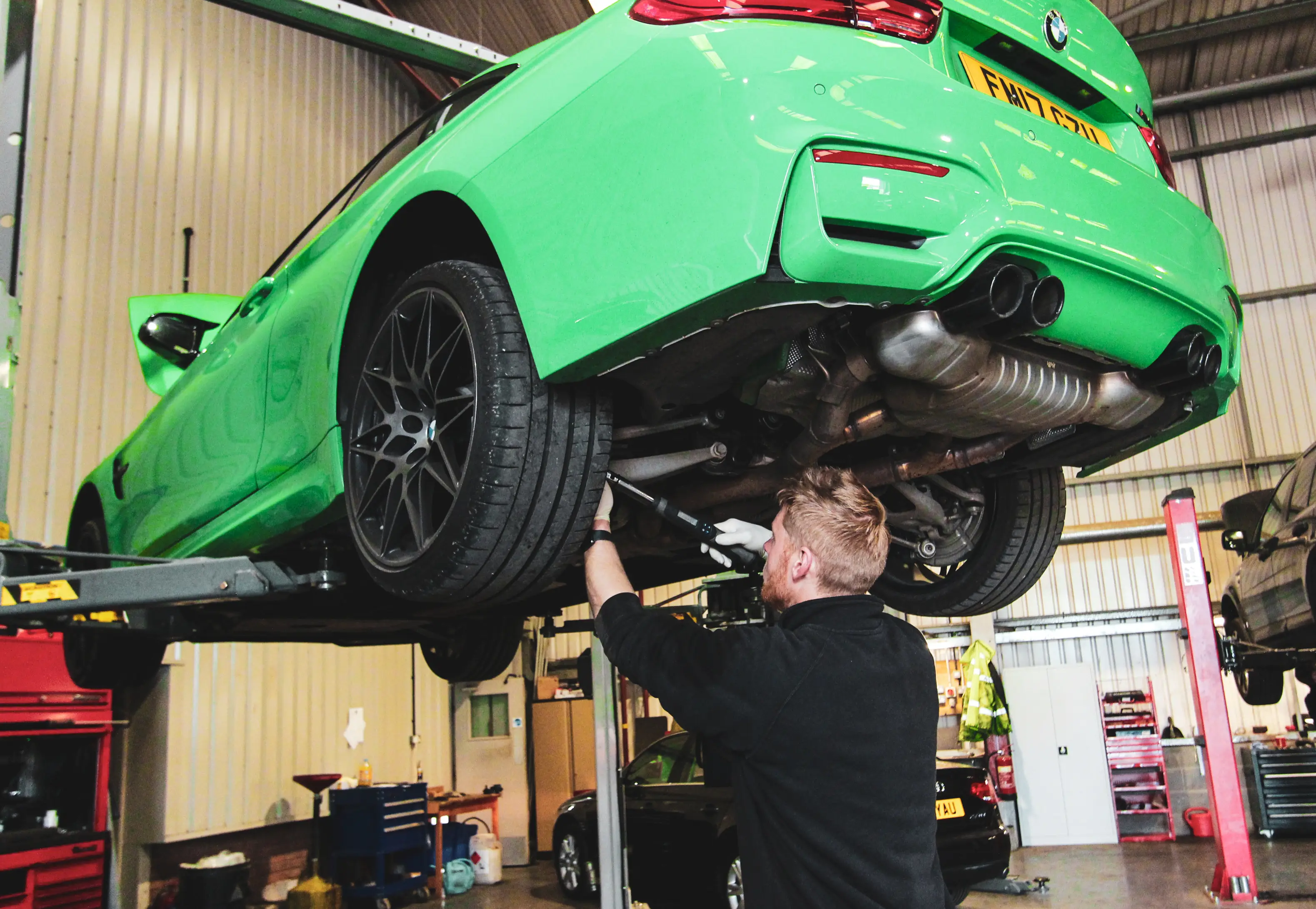
Turbos rarely die of old age
The shaft spins on a thin film of pressurised oil, and the small feed pipes on BMW diesels are known to coke up — especially on cars run to stretched long-life service intervals. Restricted oil, blocked breathers and a choked DPF are the real killers; swap the turbo without fixing them and the replacement inherits the same fate.
The other side of the coin: on N20, N55, B48 and B58 petrols, a split plastic charge pipe causes sudden underboost limp mode and a hiss under load — symptoms owners understandably blame on the turbo. It’s a fraction of the cost, and it’s why we boost-leak test before condemning anything.
Test, prove, fix the cause
Fault codes and live boost data, a smoke test of the intake for leaks, actuator checks and a physical inspection for shaft play — before any conclusion.
Video of what we found — shaft play, a cracked charge pipe, oil in the pipework — with the options in plain English. Nothing is fitted on a hunch.
Oil feed lines renewed, breather and DPF checked, oil changed — then the agreed unit fitted: reconditioned, genuine, or hybrid for tuned cars.
Primed with oil before first start, run up gradually, then road-tested with boost figures logged. Your old turbo is kept for you to inspect.
How do I know it's actually the turbo?+
You often can't from the driver's seat — boost leaks, split charge pipes, stuck actuators and sensor faults all mimic turbo failure. That's why we diagnose first: smoke test, live data and a physical inspection, with video evidence sent to you. You only pay for a turbo when the turbo is genuinely the fault.
Repair, recondition or replace — what’s the difference?+
Some faults, like sticking actuators or wastegate wear, can be repaired on the original unit. A reconditioned turbo has its rotating assembly rebuilt and balanced to factory tolerances; replacement means a new genuine or OE unit; and for remapped cars there are hybrid turbos with uprated internals. We recommend based on what we find and how you use the car.
Why did it fail — and will the new one last?+
Turbos are usually killed by their environment: degraded oil, a coked feed pipe, a blocked breather or a choked DPF raising backpressure. Swap the turbo alone and the new one inherits those conditions. Every turbo we fit goes in with the root cause fixed, fresh oil and renewed feed lines.
Can I keep driving with a whistle or smoke?+
Get it looked at promptly rather than press on. A worn turbo sheds oil into the intake and exhaust — which on a diesel also loads the DPF — and if a bearing lets go, debris travels where you really don't want it. Caught early it's often a repair; left late it becomes several jobs at once.
My car has more than one turbo — can you handle it?+
Yes — sequential twin-turbo diesels like the 335d and 535d, and the tri- and quad-turbo M50d, where the first job is identifying which turbo or control system is actually at fault. The same diagnosis-first process applies; it just matters more on these engines.
30% off repair labour for members. 15% off OE parts.
Membership is free right now (normally £69) — join before you book.