
It usually happens at the worst moment: a chime, reduced power, and a message worded something like “Drivetrain malfunction. Drive moderately.” — the exact phrasing varies by model. Few BMW warnings cause more panic, and few are less specific about what’s actually wrong.
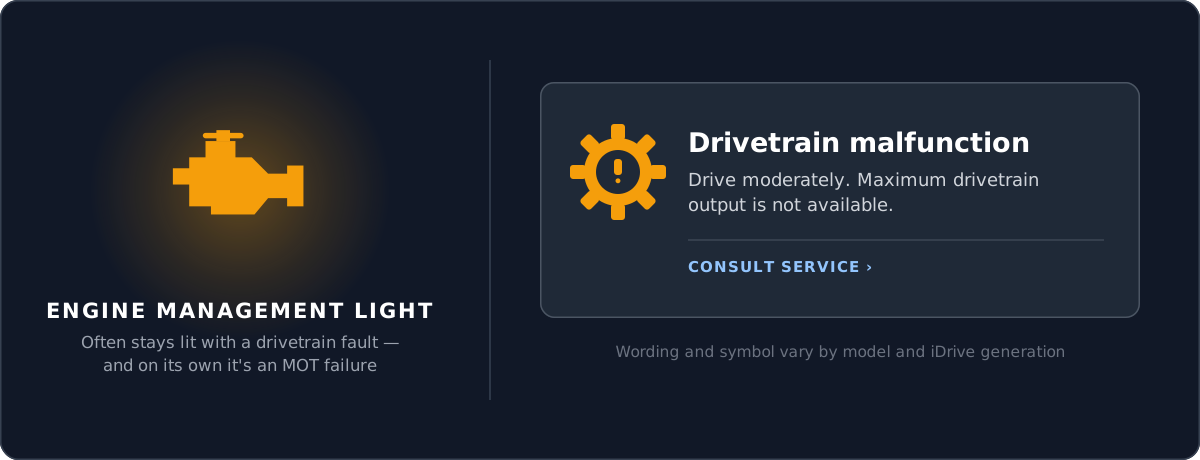
What you’ll typically see: the amber engine management light in the cluster, plus a check-control message in iDrive — the exact wording and symbol vary by model.
Here’s what’s really happening, and how to respond.
What the car is telling you
The message comes from your BMW’s engine computer (the DME) or gearbox computer (the EGS) when it detects a powertrain fault that risks causing damage. The reduced power isn’t the fault itself — it’s the protection: the computer deliberately limits torque, and may restrict revs or hold a gear, to keep the engine and gearbox safe until the problem is found.
Switching off and restarting often makes the message disappear, because the fault isn’t active at that moment. The fault code stays stored either way — the car remembers exactly what it saw, and that stored evidence is precisely what makes diagnosis quick when it’s read properly.
What to do, in order
- Don’t panic. The car is protecting itself, not failing.
- If it’s driving badly — shaking, barely pulling, repeatedly stalling — pull over somewhere safe and switch off.
- Try a restart after a couple of minutes. If the message clears and the car drives normally, carry on gently: no hard acceleration, no towing, no motorway overtakes.
- Book a diagnostic check promptly, whether or not the message returns.
- Stop and recover rather than drive if the engine light is flashing (an active misfire sending unburnt fuel into the catalytic converter), or if the car stays in heavily reduced power. A recovery truck is cheaper than a new catalytic converter.
One thing not to do: clear the codes or disconnect the battery to make the light go out. That wipes the freeze-frame data — the snapshot of load, revs and temperatures at the moment the fault set — which is the single most useful clue a technician has.
Why the same message has dozens of causes
In our experience, the most common culprits behind this warning are:
- Ignition coils and spark plugs — misfires are the number-one trigger on petrol engines.
- Boost leaks — the plastic charge pipes on many turbo engines crack with age, often with a tell-tale hiss under acceleration. The leak can be intermittent and load-only, so a quick code read alone won’t always catch it.
- Fuel system faults — high-pressure fuel pumps and injectors, both well-documented weak points on certain engines (the twin-turbo N54’s pump was the subject of a major recall campaign in North America). Occasionally it’s as simple as a tank of poor fuel.
- Turbo and wastegate actuator faults — particularly on diesels, where sticking vanes bring on limp mode under boost.
- VANOS solenoids — cheap parts that gum up with old oil and upset the engine’s timing.
- Carbon build-up on the intake valves of direct-injection engines — causing misfires even when coils and plugs are healthy.
- Diesel emissions systems — a blocked DPF, tired EGR valve or failing swirl flaps are the classic limp-mode trio on four-cylinder diesels, especially cars doing short urban trips.
- A weak 12V battery — genuinely common and often overlooked. BMW’s electronics are voltage-sensitive, and a tired battery can throw scattered “ghost” faults that mimic fuelling or boost problems. It’s also the cheapest thing on this list to test and fix.
- Gearbox faults — less common, but the gearbox module is one of the two computers behind this message, and mechatronic (valve body) issues do announce themselves this way.
That spread is exactly why “it’s probably just a coil” is a gamble. The same symptoms can point at a £30 hose or a four-figure component — and swapping parts on guesswork is the expensive way to find out which.
How it gets diagnosed properly
A generic code reader shows a handful of engine codes. BMW-level diagnostics read manufacturer-specific faults from every module in the car, plus the freeze-frame, plus live data — fuel trims, commanded versus actual boost, rail pressure — under real driving conditions. That’s the difference between knowing a cylinder misfired and knowing why.
That’s how we work: full-system scan, evidence reviewed, live testing where the fault is intermittent, then a video and a clear quote before anything is replaced. Nothing gets repaired on spec, and you see what we saw. If the fix is small, we’ll tell you it’s small.
While we’re at it: three more lights, decoded
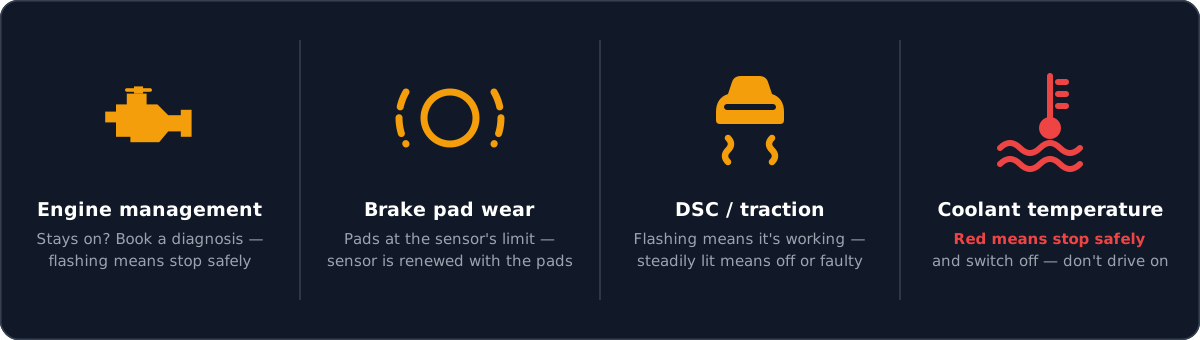
The dashboard symbols BMW owners ask us about most — all standardised telltales you’ll find in any modern BMW.
- Brake pad wear — a sensor embedded in the pad has reached its limit. It’s a one-shot sensor, replaced along with the pads; the car isn’t guessing, so don’t leave it long.
- DSC / traction — flashing means the system is actively working to keep grip (normal on a slippery road; ease off). Steadily lit means it’s switched off or has a fault worth checking.
- Coolant temperature — red means stop as soon as it’s safe and switch off. Driving on with an overheating engine is how small problems become engine rebuilds.