
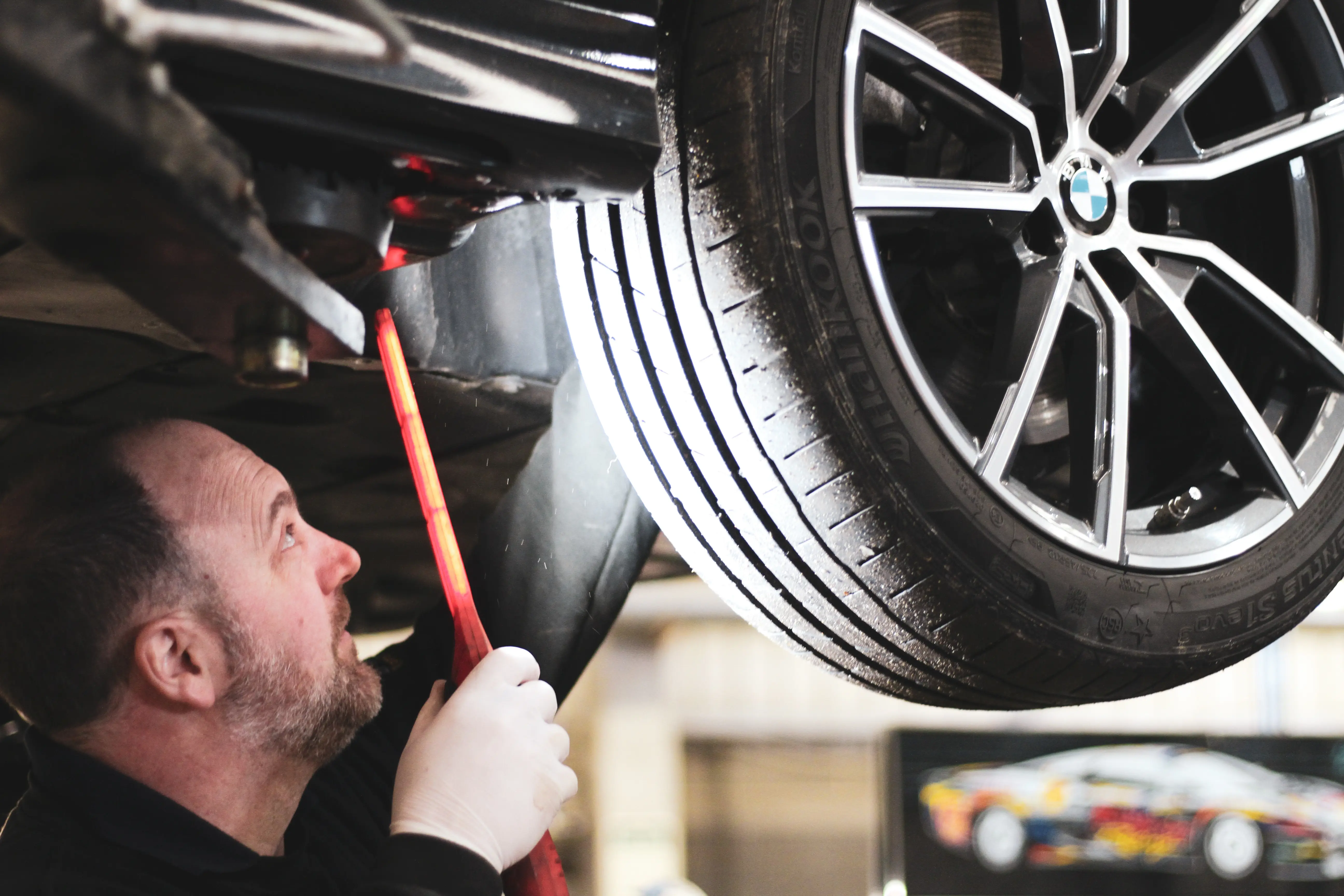
A blocked DPF is a symptom, not the fault
A healthy DPF cleans itself. When one blocks, something stopped it — and we find that cause before cleaning or replacing anything, so the filter stays clear afterwards.
How a blocking DPF shows itself
Short urban journeys are the classic trigger — the exhaust never gets hot enough for the filter to regenerate, and soot builds until the light comes on. But cold-running thermostats, EGR faults, tired injectors and lying pressure sensors do exactly the same thing.
Two insider clues worth knowing: the cooling fan roaring on after short trips often means a regeneration is being attempted, and an oil level rising above the max mark means failed regenerations are diluting the sump — a warning sign in itself.
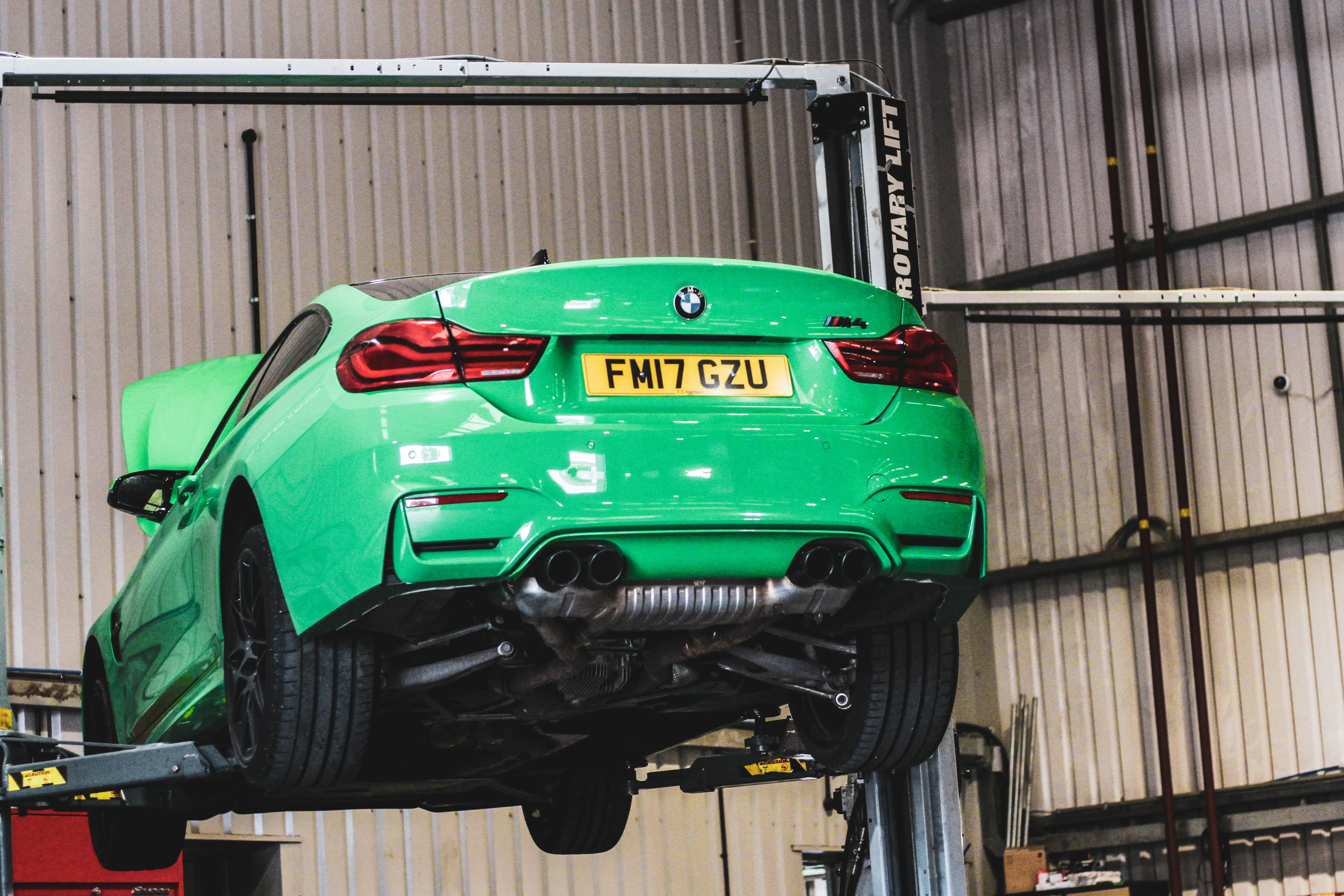
Cleaning works. Removal is illegal. Simple as that.
Every BMW diesel sold new in the UK from around 2008 carries a DPF, and removing one is not a lawful option — it's an automatic MOT failure (testers have specifically checked for tampering since 2018), an offence that carries a fine, and a quick way to trouble with your insurer. We don't do it, and you don't need it.
What actually works: the ECU tracks soot and ash separately. Soot burns off in regeneration; ash — the incombustible residue — doesn't, which is why a forced regen can't rescue a high-mileage filter but a professional off-car clean usually can, restoring flow to near-new figures for a fraction of the cost of replacement.
Measure, don’t guess
Soot and ash loading, differential pressure, exhaust temperatures and the regeneration history — that tells us whether the DPF is genuinely blocked, or just the messenger.
Thermostat, EGR, pressure sensor and injector checks — the faults that quietly stop regeneration working. Evidence to your phone before anything is agreed.
A supervised forced regeneration, an off-car deep clean that removes soot and ash, or — only where the core is cracked or melted — replacement.
Regeneration completed, road test done, and before-and-after soot and backpressure readings to show it — with the underlying cause repaired so it stays that way.
Can't I just have the DPF removed?+
No — and we wouldn't do it. Using a car on UK roads with its DPF removed is an automatic MOT failure and an offence, and it can invalidate your insurance. A proper clean restores the filter legally for a fraction of the cost of a new one — that's the fix we offer.
Will a good motorway run clear it?+
Sometimes — if the light has only just come on and the car is otherwise healthy, 15–20 minutes at a steady 50 mph or more can let a regeneration complete. But if the car keeps blocking, something is stopping regeneration from working, and no amount of motorway driving fixes a lazy thermostat or a faulty sensor. That’s what our diagnosis finds.
Is cleaning really as good as a new DPF?+
For most filters, yes. A professional off-car clean removes both soot and the ash a regeneration can’t touch, restoring flow and backpressure to near-new figures. Replacement is only right when the ceramic core is cracked or melted — which we establish, and show you, before you spend anything.
Why does my BMW keep blocking its DPF?+
Because blocking is a symptom. Short urban journeys are the most common reason, but cold-running thermostats, EGR faults, tired injectors and pressure-sensor errors all do the same thing. We diagnose the cause first, because a cleaned filter with an unfixed cause will be back.
Can I keep driving with the DPF light on?+
Treat an amber DPF light as a prompt, not an emergency — the car is asking for a sustained run. If the light stays on, returns quickly, or brings reduced power with it, stop adding soot and book in. A filter caught early can usually be regenerated or cleaned; one left to block solid narrows your options.
30% off repair labour for members. 15% off OE parts.
Membership is free right now (normally £69) — join before you book.