
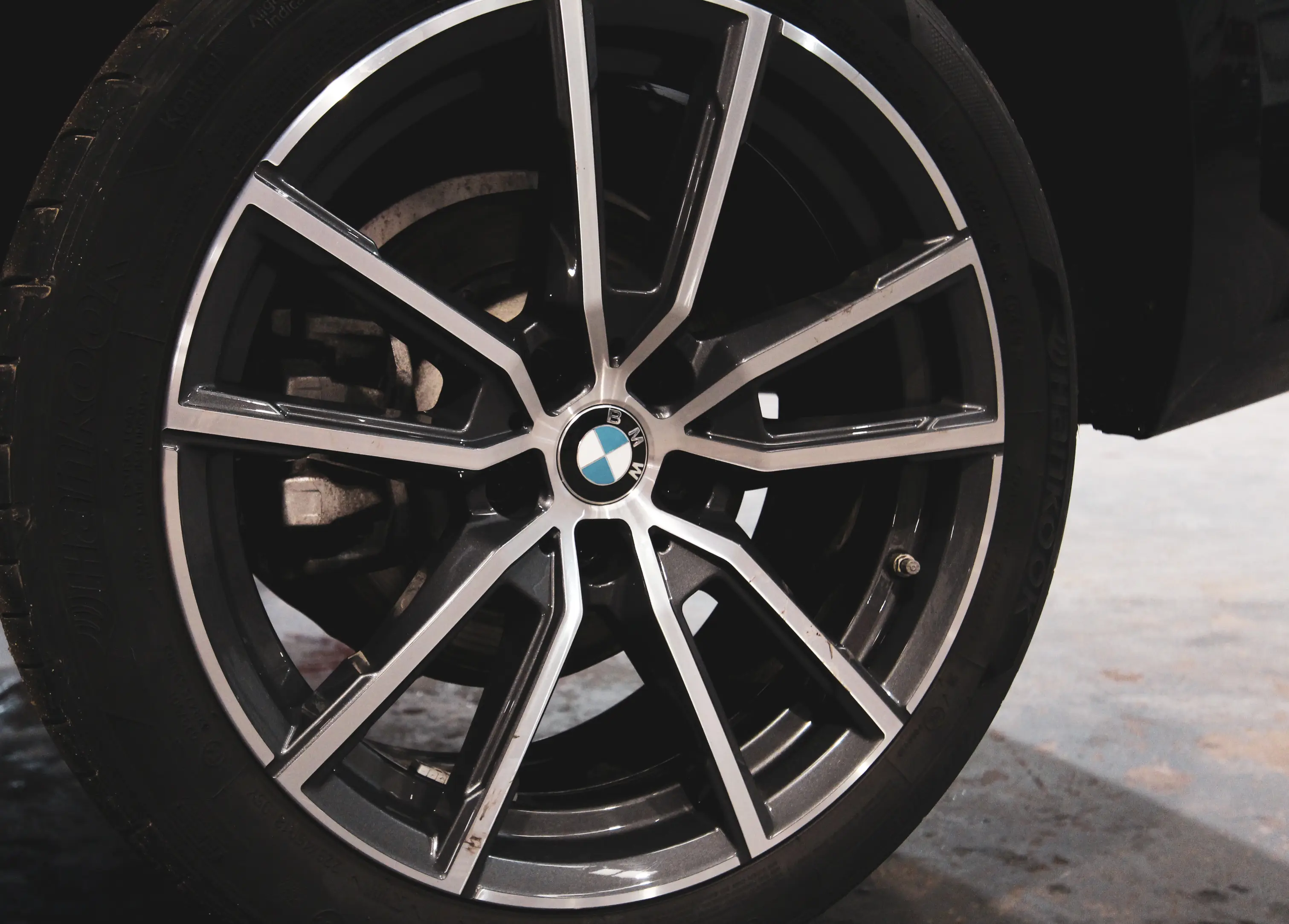
Braking the way BMW intended
Pads, discs, fluid and electronic parking brakes — measured rather than guessed, fitted to BMW specification, and calibrated so every light goes out and stays out.
What your brakes are telling you
Brakes rarely fail suddenly — they talk first. Some of these symptoms mean pads; others point somewhere else entirely, like the front suspension bush that produces an almost identical shudder to a so-called warped disc.
On gently used cars and plug-ins, watch the last one: regenerative braking uses the friction brakes so little that discs corrode before pads wear — now one of the most common MOT advisories on such cars.
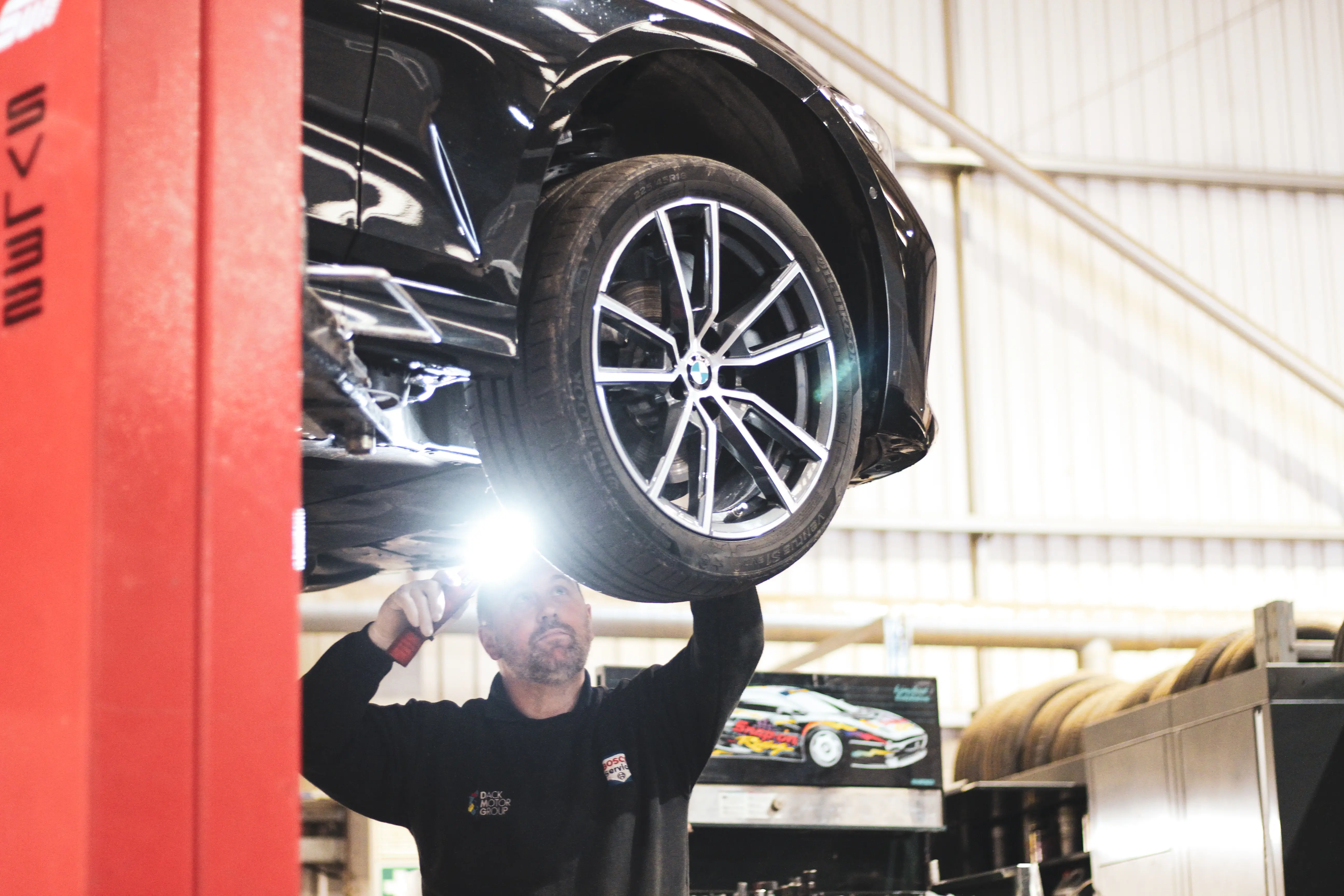
Small details decide how a BMW stops
BMW runs one pad-wear sensor at the front and one at the rear, feeding the distance countdown you see in iDrive — they’re single-use, renewed with every pad change, and the service item must be reset properly or the warning stays live. On most modern BMWs the rear calipers also house electronic parking-brake motors that must be electronically retracted before pads can be changed; forcing the piston back destroys the actuator.
And pad quality genuinely matters here: BMW calibrates pad friction alongside the servo, ABS and stability control. Bargain pads with the wrong friction behaviour are the classic cause of a wooden pedal, noise and heavy dust — we fit genuine or OE parts from the same manufacturers who supply BMW.
Measured, fitted, calibrated
Wheels off — pads measured, discs checked for thickness, corrosion and run-out, fluid tested for moisture, calipers and sensor wiring inspected. Photographed and filmed.
The evidence plus a plain-English explanation of what needs doing now and what can wait — then a fixed quote before anything is fitted.
Genuine or OE pads and discs to BMW torque specs, new wear sensors where a circuit runs, electronic parking brakes retracted in workshop mode, and the service indicator reset.
Brakes bedded in on a road test, the car returned with bedding-in advice, and your old parts kept for you to see.
Do I need discs as well as pads?+
Not automatically. Discs are renewed when they're below minimum thickness, badly lipped, corroded or causing vibration — all things we measure rather than guess. If your discs are within spec and true, we'll happily fit pads alone and show you the measurements that justify it.
My brakes feel fine — why change the fluid?+
Brake fluid absorbs moisture from the air, which quietly lowers its boiling point. It feels normal day to day, but under hard, repeated braking old fluid can fade exactly when you need it most. That's why BMW schedules renewal around every two years regardless of mileage.
Can you do rear brakes with an electronic parking brake?+
Yes — routine here. Most modern BMWs have parking-brake motors built into the rear calipers, so we put the system into workshop mode with BMW-level diagnostics, wind the actuators back, and recalibrate afterwards. It's also why rear pads on these cars aren't a driveway job.
Are cheap pads really that much worse on a BMW?+
You feel it rather than see it. BMW matches pad friction behaviour to the servo, ABS and stability control, so pads with the wrong characteristics give a dead pedal, more noise and far more dust. Genuine and OE pads come from the same suppliers who build them for BMW — that’s what we fit.
My steering shakes when I brake — warped discs?+
Probably not, despite the popular phrase. The usual cause is uneven disc thickness from pad deposits, corrosion or a sticking caliper — and on BMWs a worn front thrust-arm bush produces an almost identical shudder. We diagnose which it is first, so you only pay to fix the actual cause.
30% off repair labour for members. 15% off OE parts.
Membership is free right now (normally £69) — join before you book.